
Long Island Forest, Lake Oconee | Neighborhood Guide
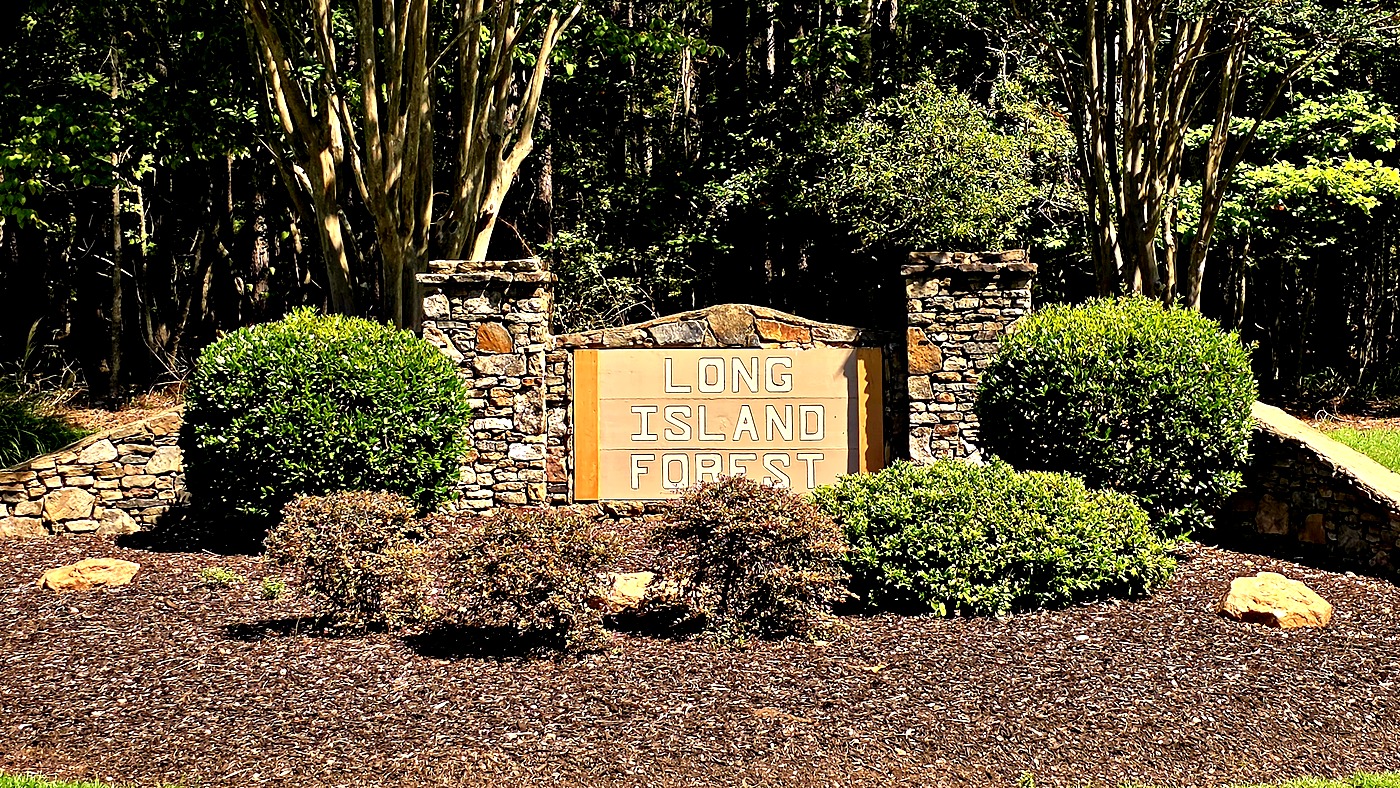
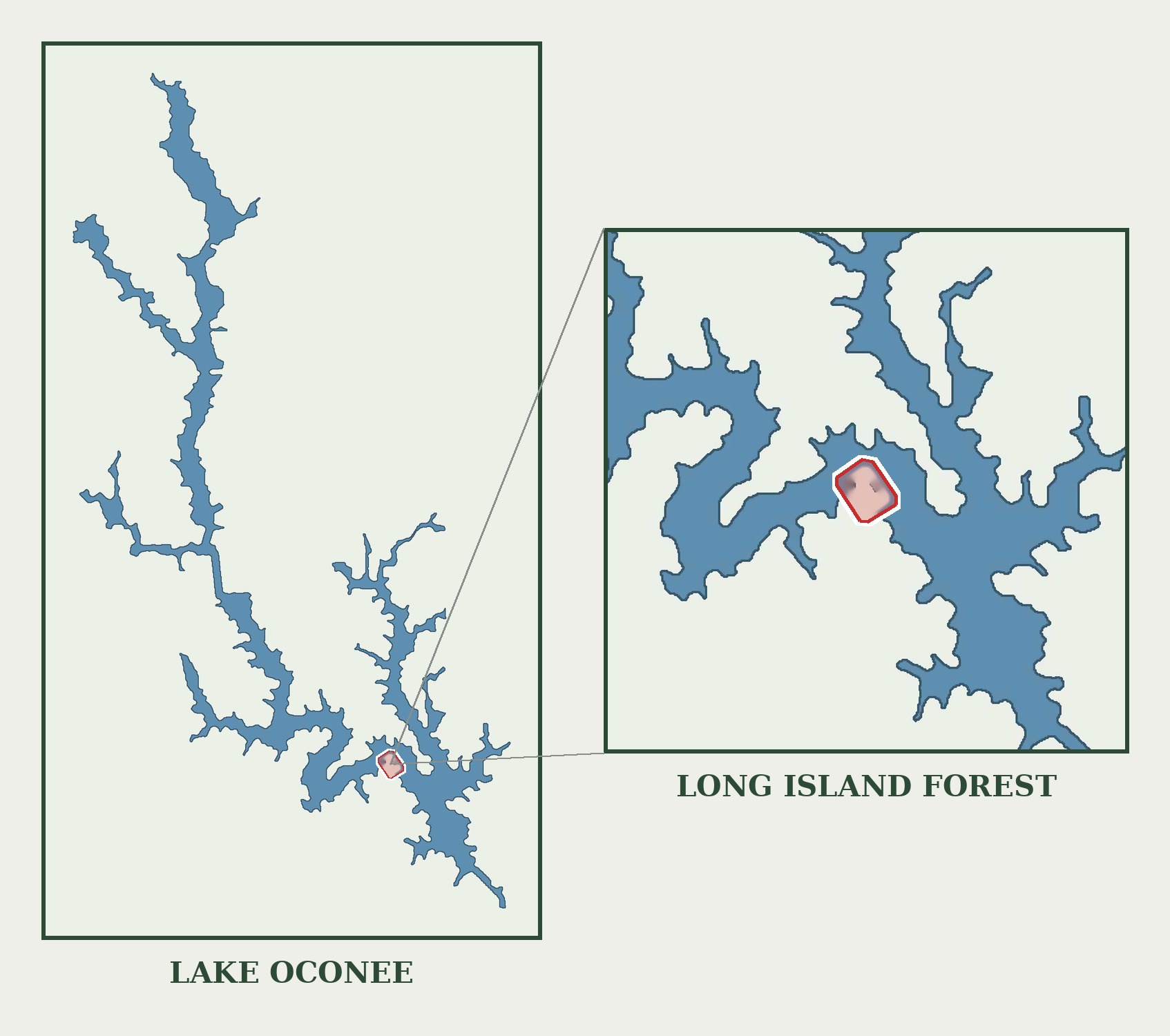
Long Island Forest occupies a large point on the southern shore of Lake Oconee, with lots facing east, north, and west across the water. It is one of the more scenic and sought-after subdivisions in this part of Putnam County, built along Long Island Drive, Forest Ridge Drive, and Forest Ridge Circle.
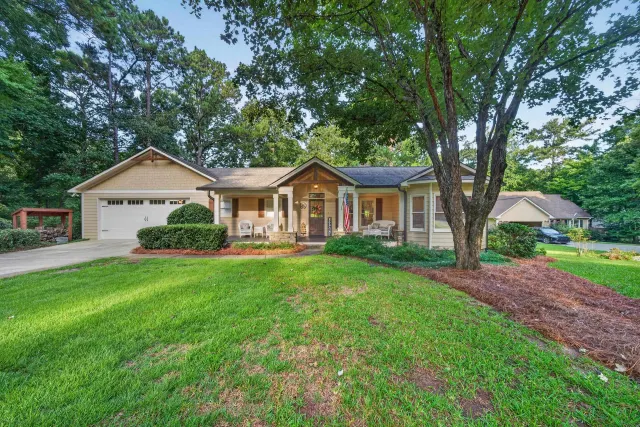
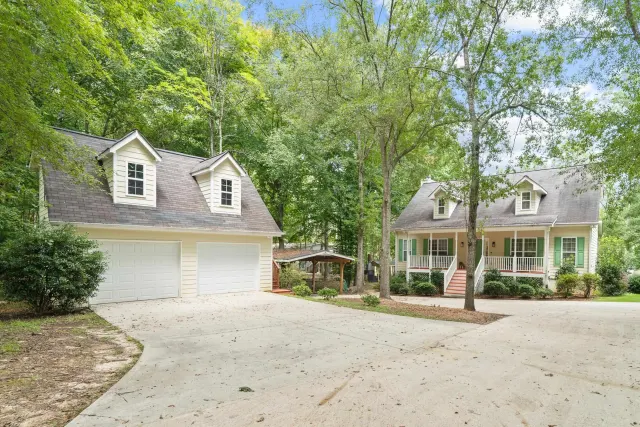
Home builds here span a full range, from the late 1980s through new construction in the 2020s. A recent sale in the subdivision topped $2 million, reflecting the demand for a point lot with water on three sides.
Quick Facts
| County / city | Putnam County — Eatonton, GA 31024 |
| Streets | Long Island Drive, Forest Ridge Drive and Forest Ridge Circle |
| Getting there | Off Long Island Drive on the southern shore, near the public Long Shoals Boat Ramp |
| Time to grocery | About 20 minutes to the new Publix in Eatonton, less without traffic. Milledgeville and the Kroger there are the other option |
| Gated | No |
| HOA | Optional, $75 to $125 a year |
| Orientation | A large point, so lots face east, north and west across the water |
| Water access | Deep water by Lake Oconee standards, with max docks on the point |
| Schools | Putnam County School System |
Where Long Island Forest Is Located on Lake Oconee
Long Island Forest sits on a point along the southern shore of Lake Oconee in Putnam County, just off Long Island Drive. It is close to Long Shoals Landing and Long Shoals Crossing, two other subdivisions in the same southern Putnam cluster. See the rest of the lake’s communities on the Lake Oconee neighborhoods page. For the full picture of this stretch of the lake, see the Lake Oconee homes in Eatonton guide.
Homes, Access & HOA in Long Island Forest
Long Island Forest carries an optional HOA, with dues in the $75 to $125 per year range — a light-touch structure for a subdivision of this caliber. Homes span a wide range of build years, from the late 1980s through new construction in the 2020s, and they vary just as much in size, on lots of about an acre.
The water is the reason to look here. The water off this point runs deep by Lake Oconee standards, deep enough in places to keep a boat in year round rather than pulling it out for the winter drawdown, and there are max docks on the point. It still varies dock to dock, so get the number on the specific property. Frontage varies a great deal too, with one fenced point parcel carrying many times what a standard lot does.
Sales here have run from the low $100,000s up past $2 million. That spread is wide because the subdivision holds both original 1980s cottages and modern houses on the point, and what you pay turns on the lot, the dock and which way it faces. Sellers who price sensibly do well, though this is not a fast market and a few months on the market is normal.
One of the subdivision’s biggest advantages is proximity to the public Long Shoals Boat Ramp, just down the road — handy for guests, extra boats, or anyone not ready to commit to a private dock right away.
Ten Thousand Years of Neighbors
This corner of the lake has a much longer history than the 1980s build dates suggest. Somewhere under the water near here sat Cane Island, an island in the Oconee River that held one of the earliest known farming villages in Georgia. Ahead of the reservoir filling, University of Georgia archaeologists excavated part of it in the late 1970s and found that people had been living along this stretch of river for something on the order of ten thousand years.
The find that mattered most was small: charred fragments of corn and squash, corn pollen, and a pair of stone hoes, all from a single household, radiocarbon-dated to roughly A.D. 245. That makes it one of the earliest pieces of evidence for farming anywhere in the state. The villagers still did most of their eating from what the river valley gave them — fish from the shoals, hickory nuts and acorns off the hillsides, wild plants out of the wetlands — but they were putting seed in the ground here almost eighteen centuries ago. The site is under the lake now. The New Georgia Encyclopedia account was written by the archaeologist who dug it. 2 listings for sale now · listed from $1.05M to $1.3M $1,295,000 4 bd · 3 ba · 3,462 sq ft · Lakefront 123 Forest Ridge Drive, Eatonton, GA 31024 Listing courtesy of Coldwell Banker Lake Oconee, 706-467-3181 · #71764 $1,050,000 4 bd · 3 ba · 2,300 sq ft · Lakefront 119 Forest Ridge Drive, Eatonton, GA 31024 Listing courtesy of Kim and Lin Logan Real Estate, 706-454-1621 · #71686 Similar home in River Lake $1,075,000 4 bd · 5 ba · 3,410 sq ft · Lakefront 536 Riverlake Drive, Eatonton, GA 31024 Listing courtesy of Kim and Lin Logan Real Estate, 706-454-1621 · #71554 Non-commercial use only. Listing data © 2026 Lake Country Board of REALTORS® MLS. Deemed reliable but not guaranteed.
Long Island Forest Homes for Sale

Frequently Asked Questions About Long Island Forest
Where is Long Island Forest located on Lake Oconee?
Long Island Forest is on a large point along the southern shore of Lake Oconee in Putnam County, built along Long Island Drive, Forest Ridge Drive, and Forest Ridge Circle. See more communities on our Lake Oconee real estate FAQs page.
Does Long Island Forest have an HOA?
Long Island Forest carries an optional HOA, with dues in the $75 to $125 per year range.
What do homes cost in Long Island Forest?
Sales have run from the low $100,000s up past $2 million. The range is wide because the subdivision holds original 1980s cottages alongside modern houses on the point, and what you pay turns largely on the lot, the dock and the water depth. Homes here span build years from the late 1980s through new construction in the 2020s.
How deep is the water at Long Island Forest docks?
Deeper than much of Lake Oconee, with max docks on the point. Depth still varies dock to dock, so confirm it on the specific property, particularly if you run a larger boat.
Is Long Island Forest close to a public boat ramp?
Yes. Long Island Forest is very close to the public Long Shoals Boat Ramp, a convenient option for guests and extra boats.
Which way do the lots in Long Island Forest face?
Because the subdivision occupies a large point on the lake, its lots face east, north, and west across the water.
Interested in Long Island Forest?
If a point lot with water on three sides, easy boat ramp access, and room to build up to $2 million and beyond sounds right, Margie Sorrell knows Long Island Forest and the entire Lake Oconee market inside and out. Contact Margie to talk through your options.
Listing information on this page is provided by the Lake Country Board of REALTORS® MLS. All information in the listing data is from sources deemed to be accurate but is not warranted. Buyers and sellers are advised to personally verify all information given on this listing as some may be estimated. Neither brokers nor sellers are responsible for inaccuracies in this information. The listing broker’s offer of compensation is made only to participants of the LCBR MLS.