Lake Oconee History: When and Why the Lake Was Built
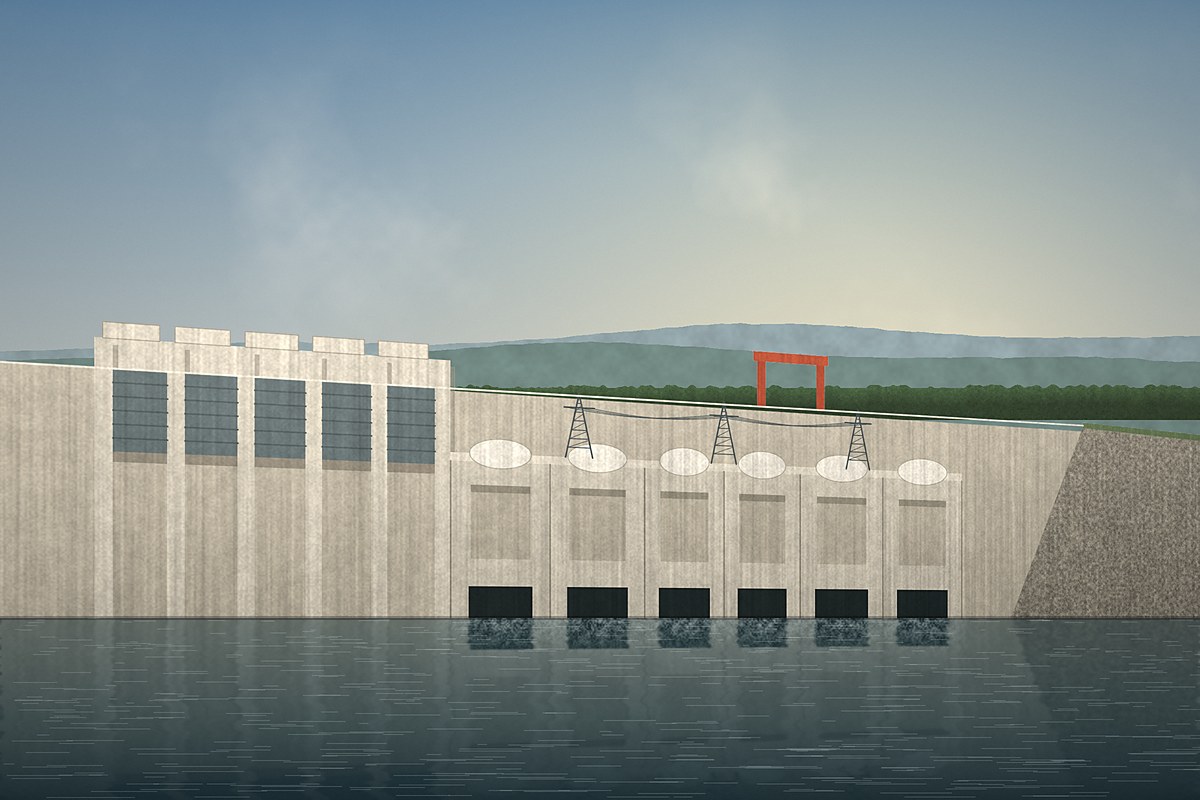
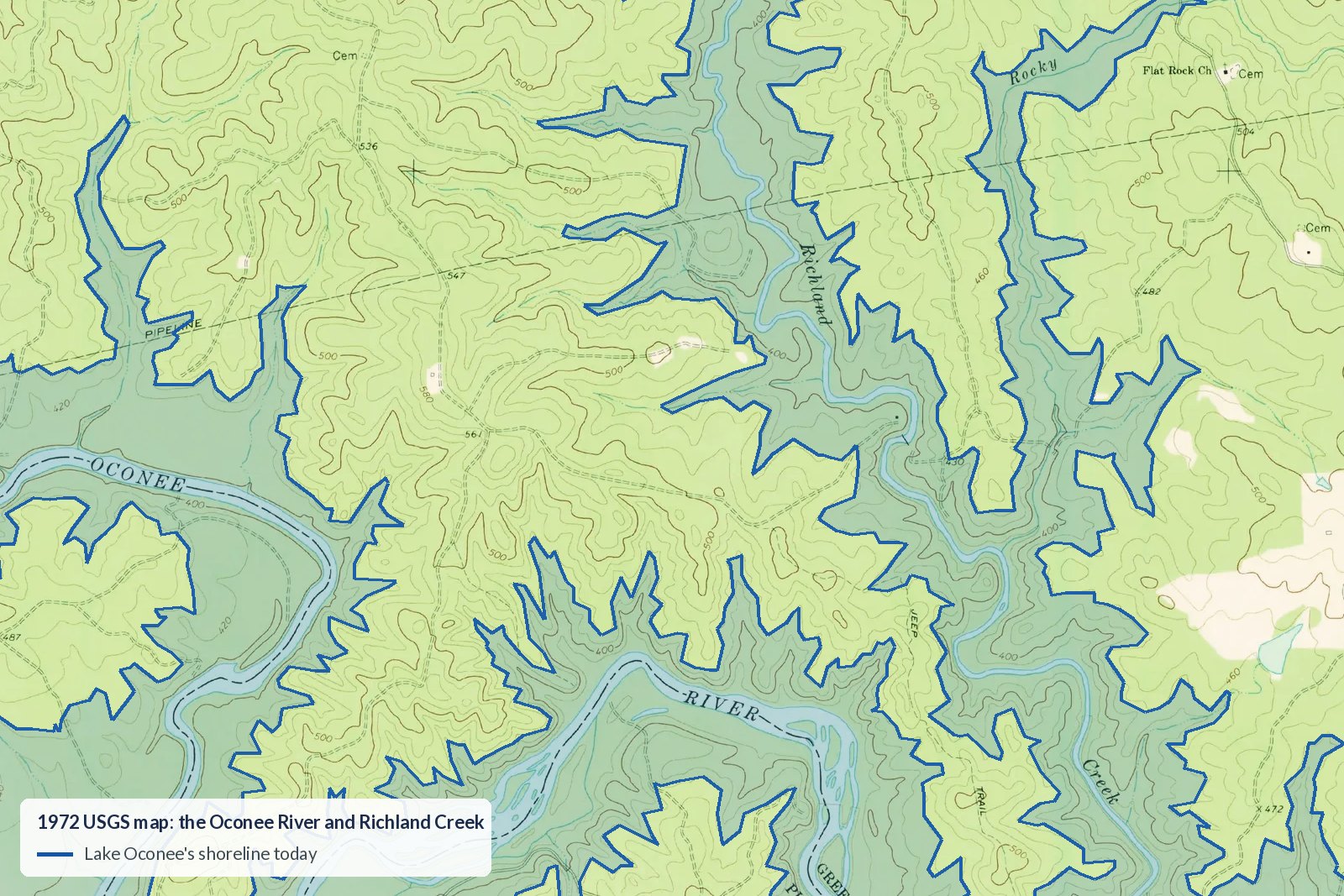
The history of Lake Oconee as a lake begins with Georgia Power, which started work on Wallace Dam in 1971, closed the dam’s gates in March 1979 and started generating power that December. The lake covered a river valley of cotton farms, mill villages and ferries that had been settled since the late 1700s. Up to 1985, only a handful of early visionaries built on Lake Oconee, in neighborhoods like Oconee Shores, Lakeview Estates and Deerfield. Within a few years, the Reynolds family, the largest landowners on the lake’s shores, turned its old Linger Longer hunting land on the lake into Reynolds Plantation, and Lake Oconee became a resort and golf destination.
Key facts: Lake Oconee history
- Georgia Power started work on Wallace Dam in September 1971, closed its gates in March 1979 and started its first generating unit on December 12, 1979, according to Georgia Power’s history of the dam.
- Wallace Dam is a pumped-storage plant: it makes electricity by releasing water into Lake Sinclair, then pumps water back up into Lake Oconee when demand is low.
- The lake covered a valley of cotton farms, mills and ferries, including the Curtright Factory, a cotton mill built at Long Shoals in the mid-1840s.
- Mercer Reynolds Sr.’s 1930s stone hunting lodge, the Rock House, now sits in about 20 feet of water on Richland Creek.
- The first lakefront neighborhoods, Oconee Shores, Lakeview Estates and Deerfield, had houses going up by 1980.
- Reynolds Plantation opened its first golf course in 1988, MetLife bought it in 2012, and it was renamed Reynolds Lake Oconee in 2015.
Lake Oconee History at a Glance
| When | What happened |
|---|---|
| Before 1805 | More than 10,000 years of Native American history in the valley, ending with the Creek cessions of 1802 and 1805See Lake Oconee Native American History |
| 1786 | Greene County and Greensboro are founded east of the OconeeNew Georgia Encyclopedia |
| Early 1800s | Mills, ferries and fords grow up at the river’s shoals, including Park’s MillGeorgia Historical Commission marker; UGA Lab Series 84 |
| 1845 and 1846 | Henry Merrell builds the Curtright Factory, a cotton mill at Long ShoalsUGA Lab Series 84; Encyclopedia of Arkansas |
| 1864 | Union troops destroy the mill and ferry at Park’s MillGeorgia Historical Commission marker |
| 1920s | The boll weevil and worn-out soil thin out the valley; Greene County loses a third of its peopleU.S. Census; New Georgia Encyclopedia |
| Early 1930s | Mercer Reynolds Sr. of Greensboro buys river land and builds a hunting and fishing getaway he calls Linger LongerGeorgia Trend; Georgia Archives |
| 1953 | Sinclair Dam is finished, creating Lake Sinclair downstreamGeorgia Power, 2016 |
| 1963 | The U.S. Army Corps of Engineers finds Laurens Shoals the only economically viable dam siteGeorgia Power, 2016 |
| 1970 | Federal regulators license the project, effective June 1Georgia Power, 2015 |
| 1971 to 1976 | Work begins in September 1971, the project is named Wallace Dam in 1972, and construction stops twice before restarting for good in 1976Georgia Power, 2016 |
| 1979 | The gates close in March and the first generating unit starts on December 12Georgia Power, 2016 |
| 1980 to 1985 | The first lakefront neighborhoods are built, including Oconee Shores, Lakeview Estates and DeerfieldHome sales records |
| 1986 | Port Armor, the lake’s first golf course, opens; Reynolds buys it in 2005 and renames it The LandingReynolds Lake Oconee; The Union-Recorder |
| Late 1980s | The Reynolds family begins developing Reynolds Plantation; its first course opens in 1988Georgia Power, 2015; Great Golf Resorts |
| 1991 | Harbor Club opensGolf Course Industry |
| 2012 and 2015 | MetLife buys Reynolds Plantation, which is renamed Reynolds Lake OconeeMetLife; Sports Illustrated |
When Was Lake Oconee Built?
Lake Oconee was built between 1971 and 1979. According to Georgia Power’s history of the dam, site work began in September 1971 and dam construction in July 1972. The spillway gates closed to begin filling the lake in March 1979, and the first generating unit at Wallace Dam started on December 12, 1979. The last units came online in 1980.
It was not a smooth build. Work stopped in December 1972 for financial reasons and stayed stopped through the 1973 oil embargo. It resumed in July 1974, stopped again in January 1975 with the project about 17 percent complete, and restarted for good in spring 1976.
The dam was known as the Laurens Shoals project until 1972, when Georgia Power named it Wallace Dam in honor of C.M. Wallace Jr., the company’s recently retired executive vice president.
Why Did Georgia Power Build Lake Oconee?
Georgia Power built Lake Oconee to store water for electricity at times of peak demand. Wallace Dam is a pumped-storage plant: it releases water from Lake Oconee into Lake Sinclair to generate power, then pumps water back up into Lake Oconee when demand is low. Lake Sinclair, finished in 1953, serves as the lower reservoir.
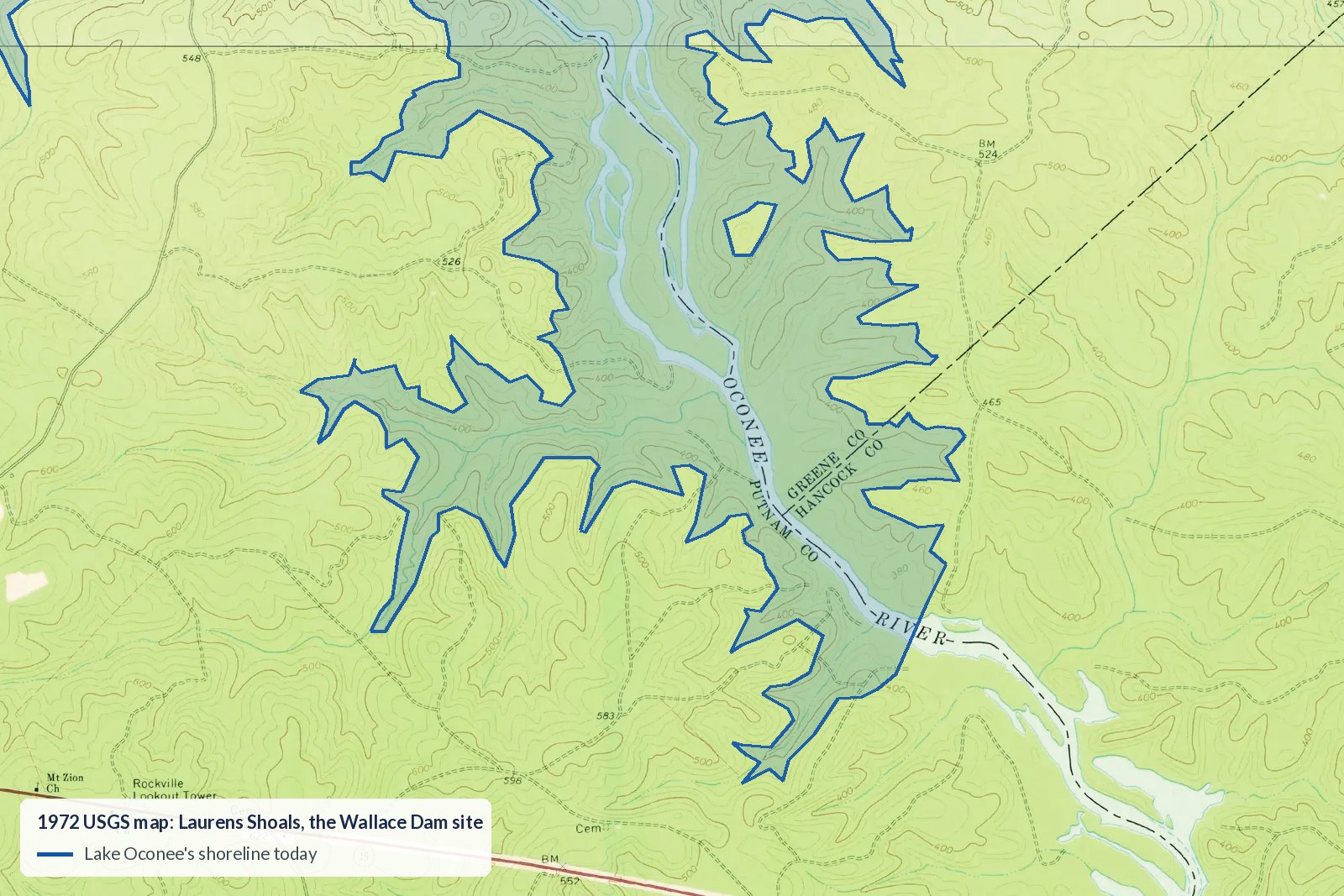
By the 1960s, few good sites were left for conventional hydroelectric dams in Georgia, and a conventional plant at this spot was not justified on its own. In 1963 the U.S. Army Corps of Engineers found Laurens Shoals on the Oconee River the only economically viable site in its study area. Georgia Power applied for its license in 1966, and the construction of Interstate 20 across the valley sped up the planning.
What Was Here Before Lake Oconee?
Before the lake, this was a river valley of cotton farms, mills and ferries. The Oconee ran over a series of rocky shoals, starting with Long Shoals, the largest, then Riley Shoals and Lawrence Shoals, and settlers built mills at the falls.
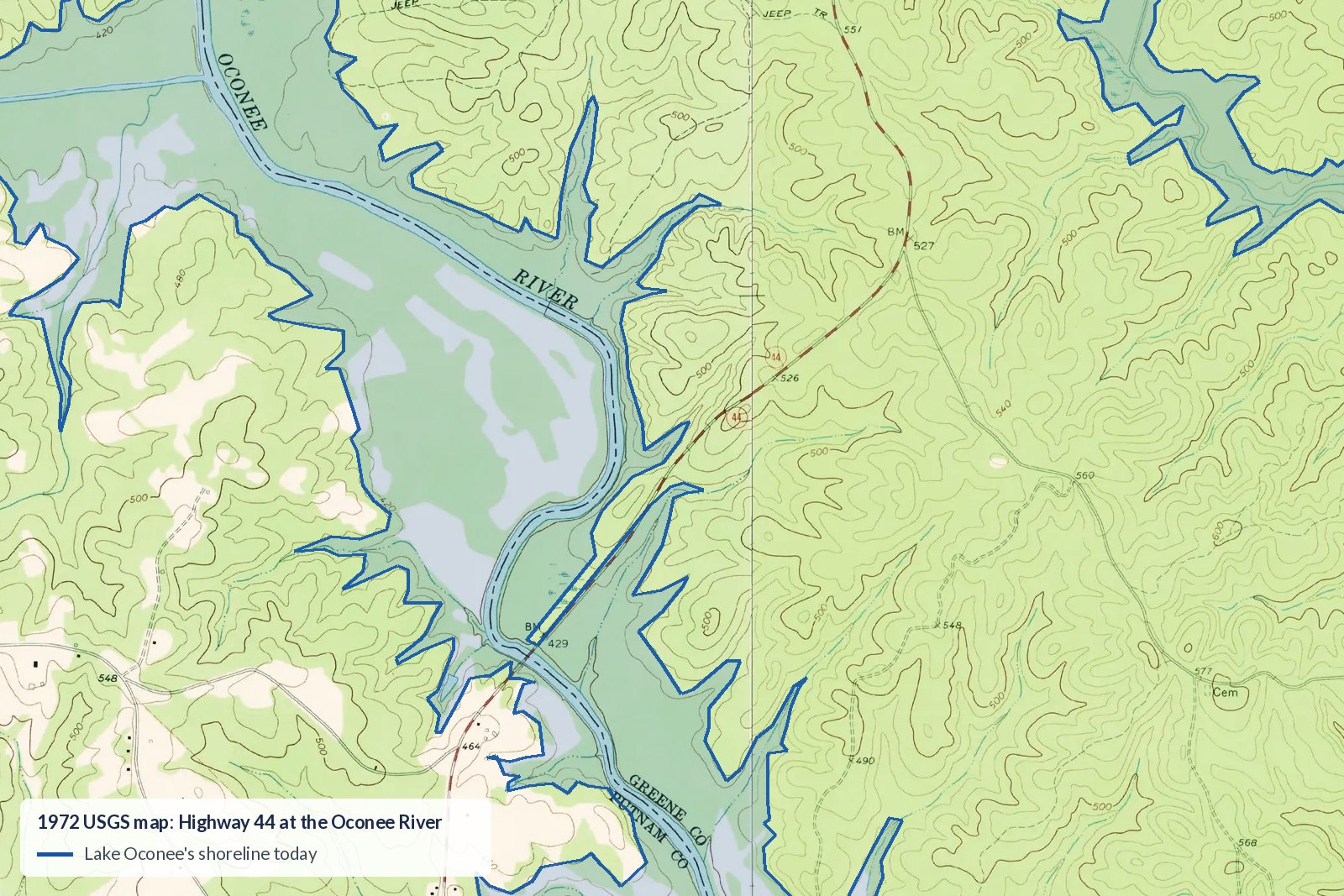
- Curtright Factory In 1845, Henry Merrell came from the mill at Roswell to build a cotton factory at Long Shoals, where the river made a horseshoe bend. Union troops burned the river bridge at Long Shoals in 1864 but spared the mill after its Northern manager convinced Sherman’s scouts that he owned much of it. It ran until shortly after the Civil War, and in 1938 Raper found its brick walls still standing with trees growing inside them. Part of its mill village is now under the lake.
- Park’s Mill The Park family ran a grist mill, sawmill and ferry here in the early 1800s. Union troops under General Geary destroyed the mill and ferry on November 20, 1864, but spared the house.
- Scull Shoals Just upriver of today’s lake, Scull Shoals had one of Georgia’s first paper mills around 1810. A flood hit in 1887, and the town was abandoned by 1897.
- The Richland Creek fisheries In the county’s early years, two cooperatives, the Yazoo and Methodist fisheries, kept a dam and fish traps on the island at the mouth of Richland Creek. Each was made up of 26 families, who took two-week turns tending the traps. Yazoo Fishery is now a street name in Reynolds Lake Oconee.
Cotton wore out the land. Upriver farming washed soil into the river, and after the boll weevil reached Georgia in 1915, the valley thinned out. Greene County lost a third of its population between 1920 and 1930, a decline sociologist Arthur Raper studied in his 1936 book Preface to Peasantry.
The Rock House: Mercer Reynolds’ Lodge Under the Lake
In the early 1930s, Mercer Reynolds Sr., a Greensboro businessman who made his fortune with a process for solidifying cottonseed oil, bought pine land around old Long Shoals and built a family hunting and fishing getaway he called Linger Longer. Over that decade, the family put together more than 10,000 acres of pine timberland, and by the early 1940s, sociologist Arthur Raper wrote, Mercer Reynolds owned more land in Greene County than any other man. The family’s lodge there was a stone house, the Rock House. A June 1937 photograph in the Georgia Archives shows the house and records that Mercer Reynolds named it “Lingerlonger.”
When Lake Oconee filled, the family’s Linger Longer getaway ended up on the bottom of the lake, according to Georgia Trend. The Reynolds family kept much of the land around it, and Reynolds Lake Oconee’s event venue, The Rock House, is a replica of the family’s old hunting lodge, which now sits in about 20 feet of water near Richland Pointe restaurant.
The First Neighborhoods on Lake Oconee
The first neighborhoods on Lake Oconee came years before Reynolds Lake Oconee and the other golf communities. Houses were going up in Oconee Shores, Lakeview Estates and Deerfield by 1980, and in Sandy Creek, Cedar Cove, Indian Woods and Parks Mill Landing by 1982. Thunder Valley and Whispering Pines filled in from 1983 to 1985. Before that, only a few houses were scattered on their own along the new shoreline. Many of the early homes were weekend lake cottages, ranches and A-frames, and a few of those originals still stand.
The lake’s first golf community came before Reynolds, too. Pete Bailey Jr. developed Port Armor on the Greene County shore, and its Bob Cupp golf course opened in 1986, two years before Reynolds Plantation’s first course. Reynolds bought Port Armor in 2005 and renamed it The Landing, and the homes around it are now Reynolds Landing. Bailey went on to become the founding developer and co-owner of Cuscowilla.
From Linger Longer to Reynolds Lake Oconee
In the 1980s, the Reynolds family formed the Linger Longer Development Company, named for the old hunting lodge, and began building Reynolds Plantation on that land, on the big peninsula between the Oconee River and Richland Creek. Mercer Reynolds III, Mercer Sr.’s grandson, and his third cousin Jamie Reynolds led it. Georgia Power’s relicensing filing dates the start of development to the late 1980s, and Putnam County’s population more than doubled after it began.
- The golf courses The Plantation course opened in 1988 as Reynolds’ first, followed by Great Waters by Jack Nicklaus in 1992, The National by Tom Fazio in 1997, The Oconee by Rees Jones in 2002, the Creek Club in 2007 and Richland by Tom Fazio in 2024. The Landing, the lake’s first course, opened in 1986 as Port Armor and joined Reynolds in 2005.
- The Ritz-Carlton Lodge It opened on the lake in the early 2000s.
- The sale The 2008 recession hit hard, and property sales at Reynolds Plantation fell from about 500 a year to nearly none by 2011, according to a U.S. Tax Court opinion. After the company defaulted on its loans in January 2011 and property owners voted down a plan to buy its golf clubs that April, MetLife bought Reynolds Plantation in August 2012, including six golf courses, four marinas and the Ritz-Carlton Lodge. It was renamed Reynolds Lake Oconee in 2015.
Margie on Reynolds During the Recession
We were here for all of it, and it was a strange time to be at Lake Oconee. A lot of people were unhappy, but this was a second-home market in the middle of the worst recession since the Great Depression, and people had plenty to be unhappy about beyond their lake house. Mercer and Jamie took risks, like so many did in the boom years of 2004 to 2007, and when the economy turned they took a hit like so many others.
It was 2010, and the real estate market was not exactly thriving. I was learning how to market foreclosures here at Lake Oconee, and to supplement my income I took a summer bartending job at the Lake Club to network and meet people inside the gates. Weekends and holidays were fine. During the week it was dead. The tiki bar stayed open until 8, and plenty of evenings it was just me, sitting there by myself until closing. That winter we moved into a condo across from the Lake Club. The Reynolds Parkway expansion and the new entrance had just been finished, and we could drive the wrong side of that road all the way out of the neighborhood without meeting another car.
How the Rest of Lake Oconee Grew
Other communities followed Reynolds around the lake. Harbor Club opened in 1991 with a Tom Weiskopf and Jay Morrish course. Cuscowilla, Pete Bailey Jr.’s second community on the lake, opened in 1997 around a Coore and Crenshaw course. Del Webb at Lake Oconee opened in 2007. St. Mary’s Good Samaritan Hospital opened its new building on Lake Oconee Parkway in November 2013.
What’s Under Lake Oconee?
Under Lake Oconee are the remains of the valley the lake replaced, including:
- The Rock House, Mercer Reynolds’ stone lodge and its adjacent stone dam on Richland Creek.
- Part of the Curtright Factory mill village at Long Shoals. One of the mill’s turbines was recovered and is on display at the Wallace Dam administration building.
- Old mill, dam and ferry sites at Long, Riley and Lawrence shoals, and the Park’s Mill site.
- The Dyar mound and Cane Island village, Native American sites excavated before the lake filled.
Georgia Power cleared most of the basin before filling it, burning and burying the cut trees, but standing timber remains below the surface in places. Georgia Power’s Recreation, Fishing and Submerged Timber Map shows where.
Margie on the Oldest Homes on Lake Oconee
I was born here, and now, fittingly, I happen to live in one of the oldest homes on the lake. Only a handful of the lakefront homes standing today were built before 1980. The house next door to mine is probably the oldest of all. It dates to the 1800s and was moved from the Liberty community to its spot on the lake before the water came up, because the family didn’t want it on the bottom of the lake. The Rock House stayed where it was, on Richland Creek, and divers still go down to see it.
Sources
- Georgia Power (TRC), Historic Hydro Engineering Study Report, Wallace Dam Hydroelectric Project, 2016
- Georgia Power, Pre-Application Document, Wallace Dam Project (FERC No. 2413), 2015
- Karen G. Wood, The Power of Water: Four Early Mill Sites on Georgia’s Oconee River, UGA Laboratory of Archaeology Series 84, 1992
- James Rudolph, Population, Settlement, and Subsistence in the Oconee River Valley, Georgia, UGA Laboratory of Archaeology Series 68
- Encyclopedia of Arkansas, Henry Merrell
- Arthur F. Raper, Tenants of the Almighty, Macmillan, 1943
- U.S. Census of Population, Greene County, Georgia, 1920 and 1930
- Georgia Historical Commission, Park Home and Site of Park’s Mill marker
- Oconee National Forest, Scull Shoals interpretive sign
- New Georgia Encyclopedia, Greene County; Boll Weevil; Arthur F. Raper
- Georgia Archives, photograph of the Mercer Reynolds rock house, Greene County, June 1937, Digital Library of Georgia
- Patty Rasmussen, “Lake Effect,” Georgia Trend, March 2007
- J. Scott Trubey and Bill Torpy, “At Reynolds Plantation, a Vision Comes Together, Then Falls Apart,” Atlanta Journal-Constitution, May 25, 2011
- U.S. Tax Court, Oconee Landing Property, LLC v. Commissioner, February 21, 2024
- MetLife, MetLife Completes Acquisition of Reynolds Plantation, August 2012
- Sports Illustrated, Golf’s 21st-Century Name Game, 2020
- Great Golf Resorts, Plantation Course restoration; Golf Course Industry, Harbor Club at Lake Oconee; GolfPass, Reynolds Lake Oconee courses
- Reynolds Lake Oconee, The Landing Course; The Union-Recorder, “We’re Almost Famous”, July 2025
- Visit Lake Oconee, The Rock House at Reynolds Lake Oconee
Frequently Asked Questions About Lake Oconee’s History
Who is Wallace Dam named after?
C.M. Wallace Jr., a retired executive vice president of Georgia Power. The project was named for him in 1972; before that it was called the Laurens Shoals project.
How long did it take to build Lake Oconee?
About eight years. Site work started in September 1971 and the first generating unit ran in December 1979, with two long work stoppages in between, in 1972 to 1974 and 1975 to 1976.
What town is under Lake Oconee?
Lake Oconee covered farms, mill villages and ferry crossings rather than a town, including part of the Curtright Factory village at Long Shoals and the Park’s Mill site.
Was Lake Oconee built for Reynolds Plantation?
No. Georgia Power built Lake Oconee for electric power, and Reynolds Plantation came about a decade later, largely on land the Reynolds family had owned since its Linger Longer days.
When did Lake Oconee become a resort area?
In the mid to late 1980s. Port Armor, the lake’s first golf course, opened in 1986, and Reynolds Plantation opened its first course in 1988. Harbor Club followed in 1991, and the Ritz-Carlton Lodge in the early 2000s.
What are the oldest neighborhoods on Lake Oconee?
Oconee Shores, Lakeview Estates and Deerfield, where houses were going up by 1980, followed by Sandy Creek, Cedar Cove, Indian Woods and Parks Mill Landing by 1982.
Looking for Your Own Piece of Lake Oconee History?
Some neighborhoods sit on old mill land, some on Reynolds’ hunting woods and some on land that was a farm field until the 1980s. Ask me about any of them.

